Thursday, 6 December 2018

PRE-PRODUCTION - PANASONIC DVX200 & CANON C100 COMPARRISON

As we require a second (or even third) camera for the documentary but don't have the budget to rent another camera, I spoke to Sam Creamer about the cameras we have avilable in the Tech Store and if any would match up with the Canon C100. He suggested testing the Panasonic DVX200 against the C100 as he thinks it'll be the best camera to match up with it.

What's also handy about the Panasonic is that we can rent them from University without any rental charge, they have a long zoom which is perfect for the performance videos and everyone on the course has had a chance to operate them so when it comes time to get extra camera operators (which will likely be people from the course).

To compare the two cameras I used the UCA baseroom as it's constantly lit with white lighting in there and had my subject (George Lock) sat on the couch and just got him to chat and move in front of the camera. I set both camera's up side by side and matched the settings together as best as I could. As I was still undecided on whether to use C-Log or not on the Canon C100 I kept it on for this test to see the difference:


As you can see from the first test, the footage does not match and this is due to the C-Log. With the footage needing grading it makes it a lot harder to match up with the Panasonic. I took off the C-Log and did another test with another subject (Jemma Cotterell) and as you can see, the cameras match up much better. The Panasonic's footage slightly more grey as you can see the colours of the white background change between the two and I also feel that the detail in the C100 is more than the DVX200 but these are minor and just myself being VERY picky. 

This camera will work as our 2nd (and if needed 3rd) camera for the documentary. 

GEROGE BURT INTERVIEW (DOP RESEARCH)

George Burt is a Feature Film Director of Photography who works primarily in Horror films. However, George was the DOP for the BBC 3 Documentary Tulisa, The Price of Fame back in 2014. George has won many awards for his work in Cinematography and I was fortunate enough to be a Camera Trainee under him for a short film back in 2016. I've previously written up a short interview with George for my Transitions Unit.

Through all my interviews with DOP's, I've constantly asked how to set up interviews, shoot a documentary and working with cameras but I haven't asked much about lighting. So this was my main question for George which was how do you light a documentary?

"That's like asking how do you write a script? It all depends on the story and structure. There's no one way to do this" (George Burt) George explained to me that lighting is an art, as a DOP you are in charge of bringing the Directors vision to life through camera and lighting. George said lighting is so important in narrative films but in documentaries this isn't always the case.

"Documentary crews could be as big as 20, with a Director, DOP, Lighting Director, Sound Operator, 1st AD and Producer all on set. But it can also be as small as one person being the Director, Producer, DOP, Sound and Lighting all in one. This is where you need to consider what's possible with the size of the crew and of course the budget" (George Burt)

George explained that documentaries can often use natural lighting as you're filming actuality. You aren't making beautiful films you're filming real people in real life. He went on to say if you're in a really dark room or location then you'll obviously need to bring lights in but before then you can simply have a small LED in your back pocket. George showed me a small LED called Aladdin Eye Lite (picture to the right) which is smaller than my hand but he explained it's very bright and a handy little light to have in your back pocket to add in some extra light to interviews to add in the detail on the face. 

George did go on to explain that your interviews need to be shot and lit nicely as these are where you'll get the information off the contributors. He explained that often 3 point lighting is a classic style to set up interviews but you can easily do it with 1 or 2. One source light with a diffuser on the subject is an easy but effective interview light set up but George explained if you add a fill light in the background it'l' give you the detail behind the subject. 

Wednesday, 5 December 2018

PRE-PRODUCTION - LIGHTING KIT TESTS & CHOICE

With my camera tests nearly done (only a comparison test remaining) I moved on to testing the lighting options I have available to me. Through my camera tests I was also testing lighting at times to see how the cameras would work but through my testing and also my research into other DOP's I have found some good techniques for lighting.

One of my main issues is that I'm not able to recce Tanya's house which is one of our main locations and so I can't see what the location is like and most importantly, I can't see how the lighting works is within the house, how much natural lighting gets into the house and what sort of lighting is within the house. Is it white, Tungsten, Coloured and does the lighting strobe or done via LED/Powered bulbs?

Jemma and Victoria contacted Tanya and asked for photos of her house so I could make an assumption on what lighting I would need to bring over to the location. I'm unable to post these photos however as Tanya has requested they not be shown.

Tanya's room has white lighting which works well as the lighting I've often used in my YN006 LED Light pointed straight onto the subject with a diffuser to soften the light. This has been suggested to be by the DOP's I've spoken to. I'd likely bring a second light to ensure the background is lit and we see the detail in the room as well.


This LED also works outside to add in some detail to the face, the photo to the right is from the C100 test, here I added the YN006 in front of the subject, although it doesn't flood the face of my interviewee, it adds in some light to bring out more detail in the face and also balance out the lighting more. With this being outside, the natural light works to fill the interviewee.

My LED light works better for the outside interview due to it being battery powered so I don't need to worry about mains power.

The lighting in the Sony A7S ii test shows both the Arri 2K lights and my own 600W Red Head Tungsten lights. The photo below shows the lighting here:


I have 3 Arri 2K's facing the band and my own Red Heads behind for setting and additional lighting. As you can see from the footage, the lighting is very warm and more C.T.O (Colour temperature Orange) which would likely work fine in a theatre/club but not for the interviews in Tanya's house as it won't match the lighting. However, since we don't have the location of the performance yet I can't do the lighting for there as I'm unaware what we'll have available.

PRE-PRODUCTION: CANON C100 TEST

With all the issues I'd had with the camera tests I found that I really liked the look of Canon footage but I always had the issue of audio recording with the cameras. So I looked into the video cameras which Canon produce as an option. I have been fortunate enough to use the Canon C300 before which is a 4K camera, however Victoria explained that the camera is too expensive for our budget. I then looked into the Canon C100 which is a smaller model and films in Full HD. I was told by a few film students at UCA Film Production that it's a classic documentary camera due to it's size and operating.

I rented the camera for a week to test out how it is to operate. The camera is easy to get around as the menu screen is just like the Canon 60D and Canon 5D menu so I was already finding it easy to set up the camera. All the relevant settings (peaking, white balance, ISO, zebra, audio controls) are on the body which makes set up much easier as opposed to the DSLR's where I have to do into the the menu settings and change everything through there.


The lens mount for the Canon C100 is EF Mount so my own lens's, Tamron 24mm-70mm 2.8F EF and Canon 50mm 1.4F EF both work with the camera so not additional lens's need to be rented. The fact the camera can change lens's as well works for me as it allows me to change the look which I want to do with the interviews. The camera can also film both raw footage and raw C-Log footage which allows a large amount of grading to be done to the footage.

PRE-PRODUCTION: UPDATE PITCH


All groups were asked to give an update pitch to explain what's currently happening with the project and if there are any updates. 

My section of the pitch I explained the research I've been doing, the change of filming style, explained the locations both confirmed and unconfirmed and then explained the camera tests that I have done so far, although at the time of this pitch I was still doing the Canon C100 Test. I then went on to show the kit list update and explained that we can't use the Canon 5D Mark 4 as a second camera due to budget. However, prior to giving this pitch, Sam Creamer did suggest testing the Panasonic DVX200 against the Canon C100 as it's a camera that's footage that could match closest. 

With locations,  I explained that it's confirmed that we'll be filming in Tanya's house and around her village. The location that isn't confirmed yet is the location of the performance with Tanya. Jemma really wants a classic theatre but due to budget it doesn't look like we can get one, as well, I'm not confident I could light a theatre on my own. If I had access to the theatre's lighting and control board and their technician then this would all be film. However, if not then I'll have to try and light the theatre with the lights I have available which could be difficult. 
We are looking into the possibility of a club which would be easier to light as it's smaller and would be a better atmosphere. Victoria has contacted a few clubs but it will all depend on the price as our budget isn't large.

Tuesday, 4 December 2018

PRE-PRODUCTION: CANON 5D MARK 4 TEST

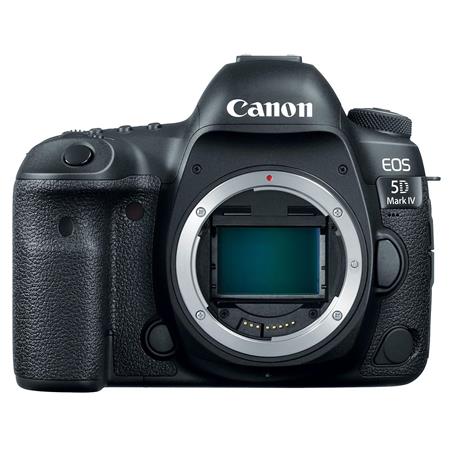
One camera which I've shot a short documentary on and really enjoyed operating was the Canon 5D Mark 4. This DSLR has an amazing look to it and I loved operating it. It has the body of my 60D so I was comfortable with it. I was operating with a 24mm-70mm 2.8F Canon lens which was a standard filming lens but also had a nice focal range. The camera can film in 4K and do video time lapse as well as having a fantastic auto-focus system with touch screen which with interviews, worked really well and helped when having to change shot quickly. Since I've already used the camera to film an entire documentary I've used a extract from one of the interviews as my test:


Annoyingly I couldn't get more footage from the documentary as it's currently being sent out to film festivals, but from the short test you can see first the quality of the footage (raw) is excellent and as well the change of shots in the footage was nice and smooth which was nice to be able to achieve, the focus was done through auto focus which allowed me to focus on zooming in and changing the shot. The annoying thing about this camera is that the footage is compressed and doesn't offer a huge amount of grading.
Also, the same issue with this camera as I've had with other DSLR's which is the audio input isn't able to take radio mic input which are XLR inputs.

This tends to be the case with the cameras I've tried and although I know now it's a Canon I want to go with (due to the colour quality of the footage and the look from the footage) but I need to find a camera which offers more with Audio recording.

However, I am debating using this as a second camera but an issue which has come forward is that there isn't enough money in the budget to get a second camera and potentially I would need 2 more cameras with the performance so I'll need to find a camera which we don't to pay for and can get for a full day of filming.

Decision: Not to use this camera


CINEMATOGRAPHY ONLINE MASTERCLASSES (DOP RESEARCH)

For more research into being a DOP for Documentaries I looked for books relevant to this. Although all the books were relevant to shooting dramas and cinematic films, not documentaries. After contacting Lee Thomas and asking for recommendations on books relating to becoming a DOP his reply was:

"Don't bother with books. You can read 100 books on cinematography and be a shit DOP. To be a Director of Photography you need hands on experience as well as knowledge but you'll get this knowledge by doing, not reading. Try watching some online videos and use what you see to get your own look, that's when you go from a camera operator to a DOP." (Lee Thomas)

With this, I went online to find some more Cinematographers who have done some online Masterclasses. I was aiming to find those who have worked on Documentaries, while looking I found a Masterclass produced by CookeOptics TV which the award winning cinematographer Mike Eley who has been the DOP for documentaries such as Marley (2012), Fire in the Night (2013) and the BAFTA Award winning documentary Touching the Void (2003):


When Mike is being asked what kit he would take on a documentary, he explains that the choice of camera depends on what he is 100% comfortable with and confident with. This is something I've found already with my research into DOP's, Sam Creamer explained to me when showing me the Black Magic Mini Ursa that it's a camera that only experienced DOP's should use and that I should go with a camera I'm confident in operating rather than something completely new. Mike says the same here and explains that the DOP needs to be confident in his operating before looking for the look of the film as this can ruin the film. He also explains that often documentary shoots only have 1 crew member so is doing everything.