For our documentary
Re-Werked, my role is the Director of Photography. For the last few months I have been researching, planning and developing the visuals for this documentary, working off the scripts and information passed over to me by Jemma Cotterell (Director & Writer) and Victoria Simmonds (Producer & Writer). Through this statement I will be explaining my visual plan for this documentary, as well as explaining why I've made these choices, referring back to my research and inspiration.
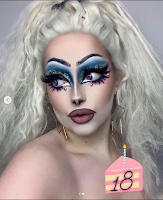 Re- Werked
 is the story about Tanya Hale, an 18 year old, Non-Binary Art Student who lives in Bodmin (Cornwall). Tanya identifies as Non-binary, until in Drag and then becomes Miss Zodi. Tanya has a huge following on Instagram (Over 10K Followers) and through the documentary we intend to learn how someone like Tanya, who lives in a small town in Cornwall, goes to become a talented Drag Queen with a huge following. But we're also looking into whether people will accept this new form of Drag. Tanya will be traveling over to Margate, Kent. Where Miss Zodi will perform at the Tom Thumb Theatre in front of an audience, along with two traditional Drag Queens, Oliver Lewis and Sapphire Stonee. While also performing infront of Amy Redmond, a woman who's involved in the Drag scene. The documentary will follow an 18 year old art student leaving their small town and traveling across to perform alongside 2 other queens and we'll see what they and the audience think of this new form of Drag.
When planning the visuals for this incredible story, I contacted many DOP's and asked questions and advice on how to be a DOP. One of the best bits of advice I recieved was:
"Anyone can learn to operate a Camera but to become DOP I think you need some artistic flare in the first place. If you like art, design or photography you can become a DOP. You must have confidence in yourself, don’t expect others to have confidence in you unless you have confidence in yourself. Don’t be arrogant! Know a good idea when you hear one regardless of who says it. I am still learning to be a DOP after entering the industry 30 years ago. Creativity has no point where you know it all, we are all practicing our art." (Jon Stapleton)
So making my mark as a DOP on this documentary was key. Some have a spesific look they go for with their footage as I found with Lee Thomas who tends to use Arri cameras as he loves the look. Sam Creamer is a huge fan of the Black Magic cameras as they give a darker look which he prefers due to shooting horror. George Burt always uses Cooke lenses as he loves the depth field you get with them and the prime look. For me however, in the time that I've shot documentaries and films, I don't go for a particular type of camera due to it's look. I like to choose my camera as if it were a tool, which one is right for the job? This documentary is about Drag Queens and from that, leans towards the LGBT community. Looking at Drag Queens and Gay pride alone, one thing sticks out:
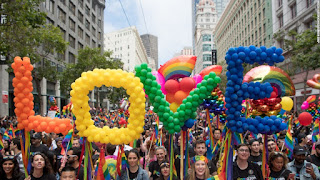
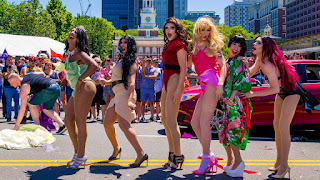
COLOUR!
Drag Queens, Pride, Performance in theatres, we're always seeing bright, happy colours. Visuals that make you go wow. Always colour is see with Drag Queens and documetnaries related to Gay Pride and this was what I wanted through
Re-Werked. To do this, I started by looking into the potential cameras avilable which could help me get that warm, colourful and saturated footage. Although I knew the footage could be altered in Post-Production through grading. When speaking to Rollo Hollins, he explained "
you had to shoot to a final look - which was much of my training, esp having started on film" (Rollo Hollins) when he was talking about filming
Alfred and Jakobine. This is what I wanted to achieve. I hate the idea of making more work for the editor and the phrase
'We'll fix it in post'. Don't break it and it doesn't need to be fixed!
As well as colour within the footage, I also needed a camera which I could operate with confidence, was easy to operate handheld or with a shoulder rig and I could change the lenses, although I had cameras avilable which I could zoom in with and change the shot, I really wanted that prime lens shot with the background completely blurred out to add more drama to the interviews with questions that got really personal and deep. And of course, a camera that could do high quality footage. At first, I was looking into getting a camera that could shoot in 4K, as Pete Beard at the RTS Talk explained that if you shoot in 4K, you can zoom in and not loose any quality. However, this is a easy way of shooting and also wasn't in the budget range. I tested many cameras; Canon 60D, Mark 5D IV, Sony A7S ii. All fantastic cameras which I was confident with but all offered different issues. One was I found out we couldn't get a sound operator so I needed a camera where I could have sound being set up with it. I tested the Black Magic Mini Ursa but this camera was far to advanced for me. The Sony PMW-EX Camera didn't offer enough quality and I couldn't change the lenses.
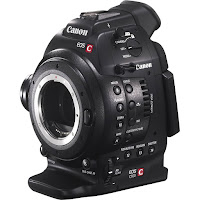
I ended up finding the Canon C100. This camera is light weight and easy to operate handheld and even easier with a shoulder rig. The camera films at Full HD 1920x1080 and takes EF Canon lenses. The camera can film both C-Log and none-profile footage offering footage which can give a higher quality grade. However, the none-profile footage is exactly what I was looking for. When I tested the camera, the colour quality of this footage was nice, bright and what I wanted, if need be you could add in 5% saturation in post to add more colour if it was needed but I don't think it will be;
The Canon C100 also has 2 XLR audio input so I can easily record the audio for the documentary with this camera. Using it with a shoulder rig and nice and easy as well which is good as it wanted to go handheld in the documentary. I was also adviced to do this,
"If you can do it handheld, do it. The footage looks and feels more natural and it's less kit and less budget spent" (Lee Thomas). What's most important is that I'm confident operating this camera, I know that if I'm not confident with the camera, it would show in the footage.
As the script developed and I researched into Drag Queen performances on
RuPaul's Drag Race and
Britains Got Talent, they had a large amount of coverage and from this I new I required a multi-camera set up for the performance shoot. Due to budget, I couldn't rent two more Canon C100 cameras so I needed to find a camera that had footage that closely matched. Talking with DOP Sam Creamer, I ended up testing the Panasonic DVX200 against the C100 and found they closely matched and due to the kit being from UCA, it didn't cost us any money so we could get 2 more cameras and then I was able to plan out my visuals for the performance and make the camera plan for the shoot.
I watched documentaries for inspiration for my own visuals. I watched
Alfred & Jakobine,
Jim & Andy, Queer Britain, Dreams of a Life, Ru Paul's Drag Race, all of these helped me to decide on the visuals but also it was reading the script over and over and thinking about the best way to tell and show this story visually. The movement of the camera is very important to me. Rollo Hollins and Lee Thomas both told me in my research that they love handheld footage and it's natural to be in documentaries. But for me, I didn't want the camera moving unless it worked with what was happening on screen. Opening of the film; Beautiful countryside, fields of green, quiet town in rural cornwall. I don't want the camera moving and shaking here. I want it stable/still with nice movement to allow the audience to really see the town and how unlikely it is for this person to be here and to be a Drag Queen. As we move towards the travel sequence, I'd need to go handheld for ease of operation during these sequences anyway but I feel that here the camera should be moving more as the excitment is starting to build, the nerves grow, the climax is approaching. By the time we're at the theatre,
performance day. Here nearly all the footage is handheld, actuality interviews instead of static, locked off as everyone is rushing around and it builds and builds until finally we get to the performance, what we've been getting to.
All this I got from Alfred & Jakobine as they shot most of the footage tripod but when it came to the taxi driving across America we went handheld and also in RuPaul's we get a lot of handheld during the build up to the catwalk and finally at the catwalk, WOW! Here's what it's been leading to.
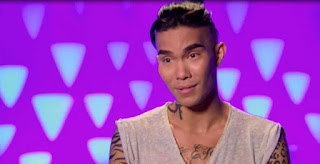
With interviews, deciding how to shoot & light these was one of the most difficult in planning my visuals. At first I wanted to go with straight forward interviews but this didn't feel right. Didn't give anything to the story and almsot felt uncomfortable. RuPaul's Drag Race was a big inspiration for how I chose to shoot my interviews. Tanya out of Drag for their interviews came from this but showing them as Miss Zodi in actuality. The interview is where we learn who they are, they tell their story and give us the information we need. Later on in the film, showing Tanya as Miss Zodi and interviewing her works really well as we've come on the journey with her. For lighting, I've gone with basic lighting, one key light and defuser which worked really well for my tests with Natasha and Ru:


This works really well in lighting my subject and the light looking nice and natural, the diffuser takes away the harsh light and helps bring out the skin tones more as they don't have a bright light shining on them and also makes the subjects more comfortable as they aren't having their eyes strained.
In terms of Amy, Oliver and Sapphire. Working with Jemma on how this would be done it was decided to film these in their Drag Acts so that they're established quicker. Tanya is our main focus. Tanya's background for their interview as well is all to tell us about who they are. Background is having her make-up, outfits, photos, phone, wigs, etc. all back there to tell us more and more about her. Oliver and Sapphire's interview will be in a location relevant to performing (The Theatre) as they still need a relevant location but not one with as much detail as Tanya's.
The choice of how to film the interviews came from speaking to Sam Creamer. He said shooting with one camera is often how he does it. Rather than two cameras set up and getting two different shots, working with one camera and changing the shot when it's relevant to not only mean you have less kit and save budget, it also gives you more as a DOP which I personally want. Although it makes operating more work it benefits the documentary more. This is also where a lens change might happen as when the question goes more personal or serious, such as when Tanya talks about being bullied or Tanya's parents talk about their opinion of Miss Zodi, here I want the background blurred out and the focus to be 100% on the subject, going close and personal to add drama. Here was the choice of the 24mm-70mm Tamron lens for standard filming and zooming in and changing the shot during interviews when needed and the 50mm Canon Prime Lens for when the interview gets serious and personal.
All of this together is my visual plan for this documentary. To show this amazing story about a truly extraordinary Drag Queen who has a great story to tell the world.


